A History of Russian Exposition and Festival Architecture
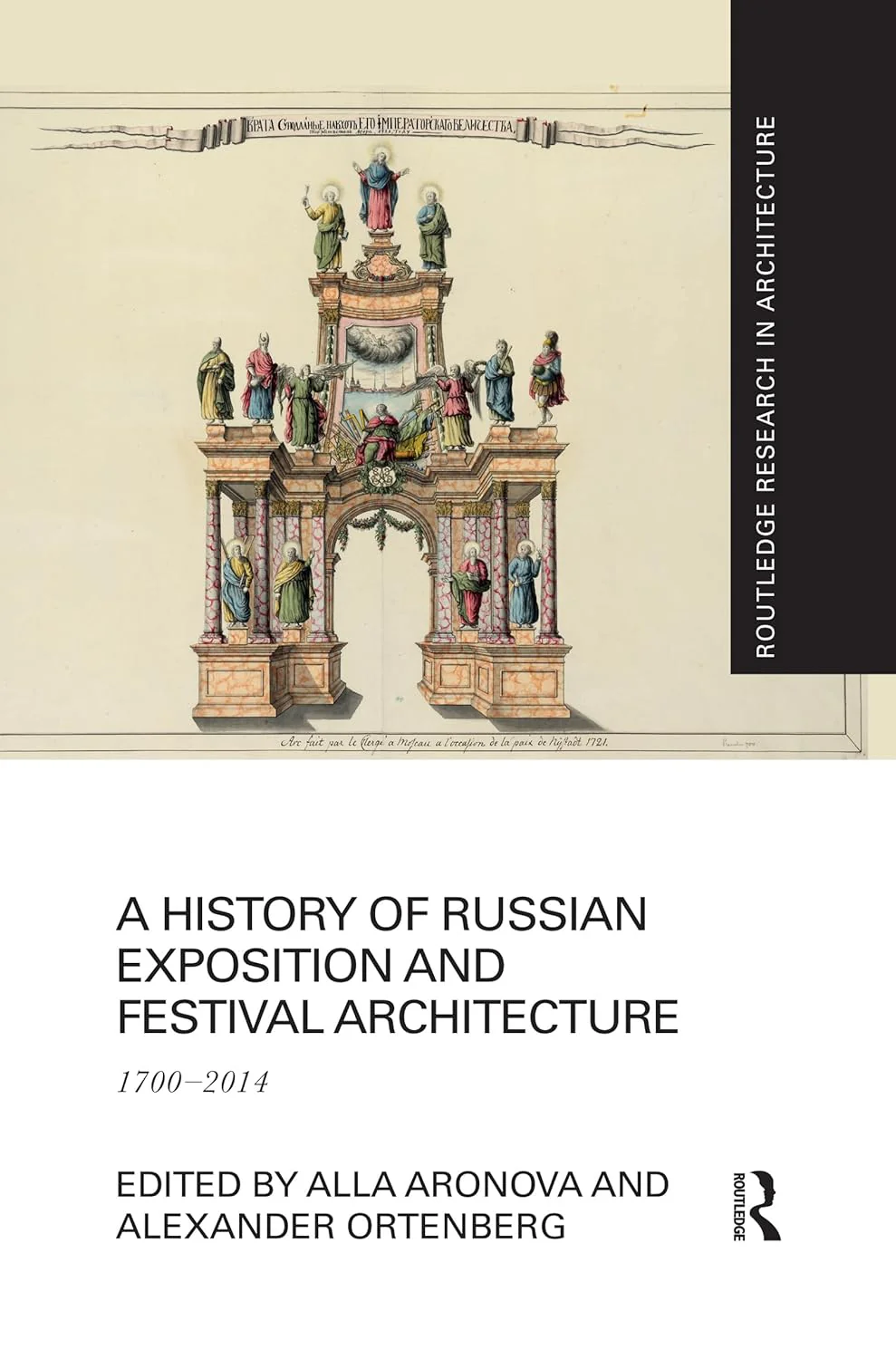
This collection of thirteen vignettes addresses several important episodes in the history of Russian temporary architecture and public art, from the royal festivals during the times of Peter the Great up to the recent venues including the Sochi Winter Olympics.
The forms and the circumstances of their design were drastically different; however, the projects discussed in A History of Russian Exposition and Festival Architecture share a common feature: they have been instrumental in the construction of Russia’s national identity. The perception of the West—simultaneously a foe and a paragon—looms high over this process.
The book offers a history of multidirectional relationships between diplomacy, propaganda, and architecture.
This collection of thirteen vignettes addresses several important episodes in the history of Russian temporary architecture and public art, from the royal festivals during the times of Peter the Great up to the recent venues including the Sochi Winter Olympics.
The forms and the circumstances of their design were drastically different; however, the projects discussed in A History of Russian Exposition and Festival Architecture share a common feature: they have been instrumental in the construction of Russia’s national identity. The perception of the West—simultaneously a foe and a paragon—looms high over this process.
The book offers a history of multidirectional relationships between diplomacy, propaganda, and architecture.
Original: $57.06
-65%$57.06
$19.97Description
This collection of thirteen vignettes addresses several important episodes in the history of Russian temporary architecture and public art, from the royal festivals during the times of Peter the Great up to the recent venues including the Sochi Winter Olympics.
The forms and the circumstances of their design were drastically different; however, the projects discussed in A History of Russian Exposition and Festival Architecture share a common feature: they have been instrumental in the construction of Russia’s national identity. The perception of the West—simultaneously a foe and a paragon—looms high over this process.
The book offers a history of multidirectional relationships between diplomacy, propaganda, and architecture.