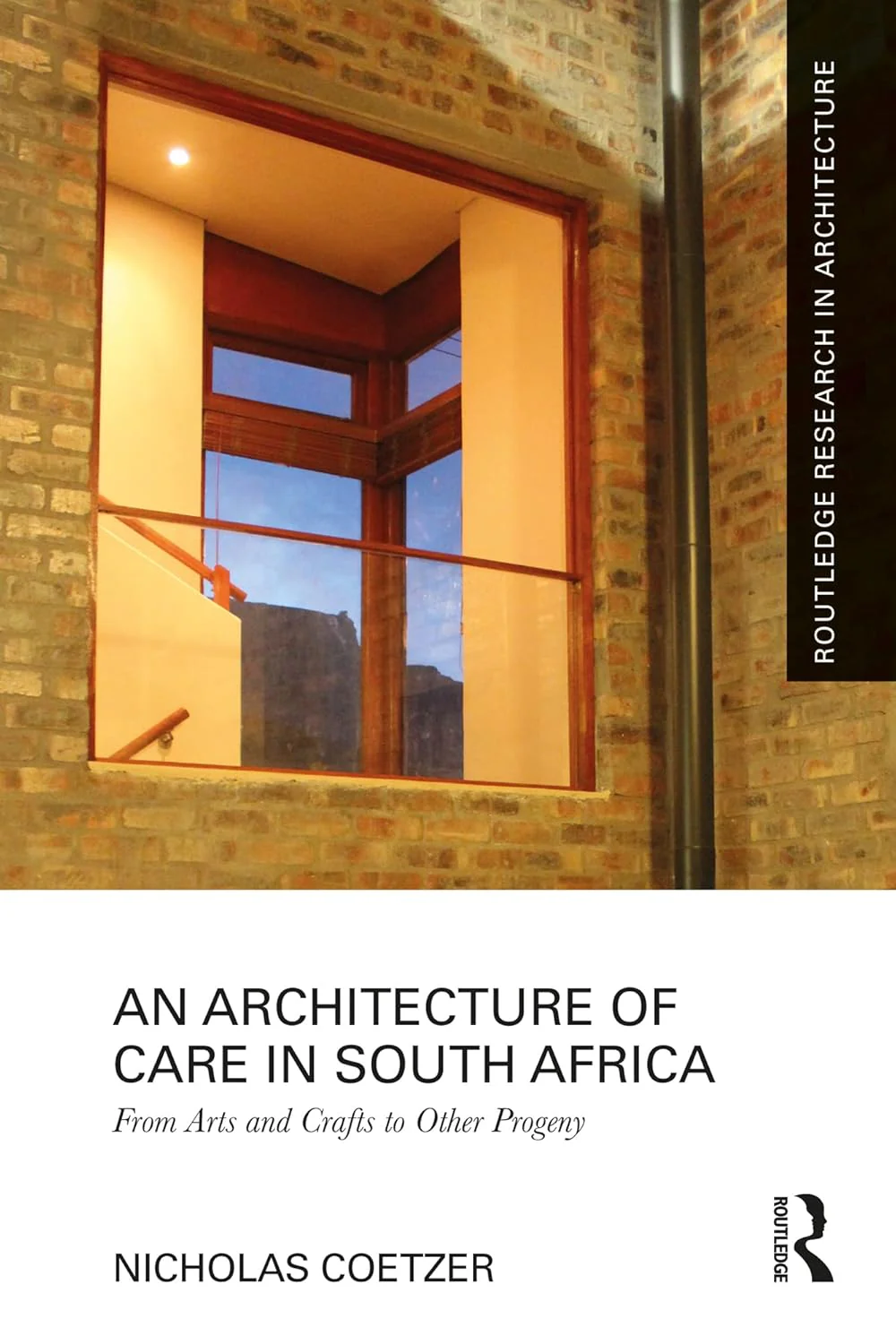
An Architecture of Care in South Africa
Architects care. It is foundational and germane to the discipline and practice of architecture. This book charts the way the Arts and Crafts Movement established the moral ethos of an architecture of care that not only remains embedded in current discourse and practice but also that is being given a more vocal presence in our climate-crisis and social justice world.
By way of ‘genealogical strands,’ the book charts the origin of architecture of care ideas in the Arts and Crafts Movement and their impact on the ‘other progeny’ architectural projects in South Africa over the past hundred years. These range from the translation of inglenooks into an armature architecture of ‘Dignified Places’ in Cape Town’s townships to the ethos of ‘upliftment’ and care that translates from Octavia Hill through to ‘correcting’ building regulations and eventually finding a less moralising and more transformative impact in the ‘Hostels to Homes’ project.
The birth of design through context and climate in the Arts and Crafts Movement is demonstrated by the shift in South African houses from boxy cottages to solar- and nature-oriented ribbon plans as demonstrated through the work of Helmut Stauch and Norman Eaton. The dislocation of Arts and Crafts ideas to the Cape also demonstrated a limit to the valorising of vernacular architecture and its ‘against-globalization’ building materials whereby English architects promoted Cape Dutch settler architecture and denigrated African vernacular architecture. As a final ‘genealogical strand,’ the book demonstrates the coherence of moral instrumentality with the animism and affects potential of handmade buildings.
Written for academics, students, and researchers interested in architectural history, it is an eye-opening investigation into the role of architecture in society.
Architects care. It is foundational and germane to the discipline and practice of architecture. This book charts the way the Arts and Crafts Movement established the moral ethos of an architecture of care that not only remains embedded in current discourse and practice but also that is being given a more vocal presence in our climate-crisis and social justice world.
By way of ‘genealogical strands,’ the book charts the origin of architecture of care ideas in the Arts and Crafts Movement and their impact on the ‘other progeny’ architectural projects in South Africa over the past hundred years. These range from the translation of inglenooks into an armature architecture of ‘Dignified Places’ in Cape Town’s townships to the ethos of ‘upliftment’ and care that translates from Octavia Hill through to ‘correcting’ building regulations and eventually finding a less moralising and more transformative impact in the ‘Hostels to Homes’ project.
The birth of design through context and climate in the Arts and Crafts Movement is demonstrated by the shift in South African houses from boxy cottages to solar- and nature-oriented ribbon plans as demonstrated through the work of Helmut Stauch and Norman Eaton. The dislocation of Arts and Crafts ideas to the Cape also demonstrated a limit to the valorising of vernacular architecture and its ‘against-globalization’ building materials whereby English architects promoted Cape Dutch settler architecture and denigrated African vernacular architecture. As a final ‘genealogical strand,’ the book demonstrates the coherence of moral instrumentality with the animism and affects potential of handmade buildings.
Written for academics, students, and researchers interested in architectural history, it is an eye-opening investigation into the role of architecture in society.
Description
Architects care. It is foundational and germane to the discipline and practice of architecture. This book charts the way the Arts and Crafts Movement established the moral ethos of an architecture of care that not only remains embedded in current discourse and practice but also that is being given a more vocal presence in our climate-crisis and social justice world.
By way of ‘genealogical strands,’ the book charts the origin of architecture of care ideas in the Arts and Crafts Movement and their impact on the ‘other progeny’ architectural projects in South Africa over the past hundred years. These range from the translation of inglenooks into an armature architecture of ‘Dignified Places’ in Cape Town’s townships to the ethos of ‘upliftment’ and care that translates from Octavia Hill through to ‘correcting’ building regulations and eventually finding a less moralising and more transformative impact in the ‘Hostels to Homes’ project.
The birth of design through context and climate in the Arts and Crafts Movement is demonstrated by the shift in South African houses from boxy cottages to solar- and nature-oriented ribbon plans as demonstrated through the work of Helmut Stauch and Norman Eaton. The dislocation of Arts and Crafts ideas to the Cape also demonstrated a limit to the valorising of vernacular architecture and its ‘against-globalization’ building materials whereby English architects promoted Cape Dutch settler architecture and denigrated African vernacular architecture. As a final ‘genealogical strand,’ the book demonstrates the coherence of moral instrumentality with the animism and affects potential of handmade buildings.
Written for academics, students, and researchers interested in architectural history, it is an eye-opening investigation into the role of architecture in society.