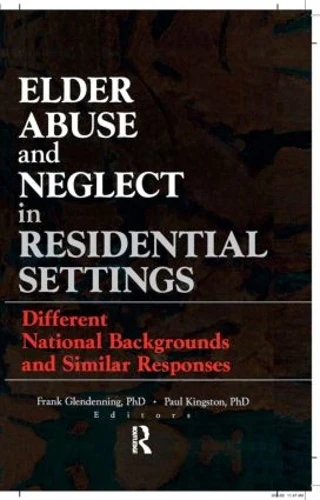
Elder Abuse and Neglect in Residential Settings
Elder Abuse and Neglect in Residential Settings: Different National Backgrounds and Similar Responses contains insights and examples from various countries where elder abuse and neglect have been recognised as issues requiring social policy attention. Nursing home employees, professionals, and policymakers will explore both the physical and psychological aspects of neglect in nursing homes.
Elder Abuse and Neglect in Residential Settings discusses deliberate physical abuse and more common forms of neglect and abuse, such as bedsores, poor nutrition, improper medication, and vermin infestation. Let this informative guide help you recognise the causes of elder abuse and neglect in order to prevent the same problems in your nursing home.
Examining nursing home settings in America, Canada, England, Sweden, the United Kingdom, and South Africa, the book brings you firsthand accounts of the problems of elder abuse on a multicultural level. It also examines reasons for abuse and neglect, such as poor wages, long hours, low job prestige of nurse aides, and high exhaustion levels that have led to abuse and neglect by even the most caring individuals.
Through Elder Abuse and Neglect in Residential Settings, you will discover what factors directly correlate to the abuse and neglect of patients by:
- examining the high turnover rates of lower-paid nurse aides
- understanding that well-qualified staff do not choose to work in nursing homes and that often abuse and neglect are committed by nurse aides
- gaining insight into the risks of physical assault and verbal abuse by patients that nurse aides may endure every day
- exploring the psychological aspects of neglect in nursing homes such as uncleanliness, lack of attractiveness in the physical environment, inadequate diet, infantilisation, and passive neglect, and what can be done to prevent these behaviours
Elder Abuse and Neglect in Residential Settings discusses the elements significant to the future and quality of residential care. From this book, you will understand the importance of considering the characteristics of the patients and staff, as well as the importance of developing gender-integrated and multicultural services. Elder Abuse and Neglect in Residential Settings will prove essential in your understanding of the worldwide problem of elder abuse and neglect in residential care and help you alleviate it.
Elder Abuse and Neglect in Residential Settings: Different National Backgrounds and Similar Responses contains insights and examples from various countries where elder abuse and neglect have been recognised as issues requiring social policy attention. Nursing home employees, professionals, and policymakers will explore both the physical and psychological aspects of neglect in nursing homes.
Elder Abuse and Neglect in Residential Settings discusses deliberate physical abuse and more common forms of neglect and abuse, such as bedsores, poor nutrition, improper medication, and vermin infestation. Let this informative guide help you recognise the causes of elder abuse and neglect in order to prevent the same problems in your nursing home.
Examining nursing home settings in America, Canada, England, Sweden, the United Kingdom, and South Africa, the book brings you firsthand accounts of the problems of elder abuse on a multicultural level. It also examines reasons for abuse and neglect, such as poor wages, long hours, low job prestige of nurse aides, and high exhaustion levels that have led to abuse and neglect by even the most caring individuals.
Through Elder Abuse and Neglect in Residential Settings, you will discover what factors directly correlate to the abuse and neglect of patients by:
- examining the high turnover rates of lower-paid nurse aides
- understanding that well-qualified staff do not choose to work in nursing homes and that often abuse and neglect are committed by nurse aides
- gaining insight into the risks of physical assault and verbal abuse by patients that nurse aides may endure every day
- exploring the psychological aspects of neglect in nursing homes such as uncleanliness, lack of attractiveness in the physical environment, inadequate diet, infantilisation, and passive neglect, and what can be done to prevent these behaviours
Elder Abuse and Neglect in Residential Settings discusses the elements significant to the future and quality of residential care. From this book, you will understand the importance of considering the characteristics of the patients and staff, as well as the importance of developing gender-integrated and multicultural services. Elder Abuse and Neglect in Residential Settings will prove essential in your understanding of the worldwide problem of elder abuse and neglect in residential care and help you alleviate it.
Original: $112.98
-65%$112.98
$39.54Description
Elder Abuse and Neglect in Residential Settings: Different National Backgrounds and Similar Responses contains insights and examples from various countries where elder abuse and neglect have been recognised as issues requiring social policy attention. Nursing home employees, professionals, and policymakers will explore both the physical and psychological aspects of neglect in nursing homes.
Elder Abuse and Neglect in Residential Settings discusses deliberate physical abuse and more common forms of neglect and abuse, such as bedsores, poor nutrition, improper medication, and vermin infestation. Let this informative guide help you recognise the causes of elder abuse and neglect in order to prevent the same problems in your nursing home.
Examining nursing home settings in America, Canada, England, Sweden, the United Kingdom, and South Africa, the book brings you firsthand accounts of the problems of elder abuse on a multicultural level. It also examines reasons for abuse and neglect, such as poor wages, long hours, low job prestige of nurse aides, and high exhaustion levels that have led to abuse and neglect by even the most caring individuals.
Through Elder Abuse and Neglect in Residential Settings, you will discover what factors directly correlate to the abuse and neglect of patients by:
- examining the high turnover rates of lower-paid nurse aides
- understanding that well-qualified staff do not choose to work in nursing homes and that often abuse and neglect are committed by nurse aides
- gaining insight into the risks of physical assault and verbal abuse by patients that nurse aides may endure every day
- exploring the psychological aspects of neglect in nursing homes such as uncleanliness, lack of attractiveness in the physical environment, inadequate diet, infantilisation, and passive neglect, and what can be done to prevent these behaviours
Elder Abuse and Neglect in Residential Settings discusses the elements significant to the future and quality of residential care. From this book, you will understand the importance of considering the characteristics of the patients and staff, as well as the importance of developing gender-integrated and multicultural services. Elder Abuse and Neglect in Residential Settings will prove essential in your understanding of the worldwide problem of elder abuse and neglect in residential care and help you alleviate it.