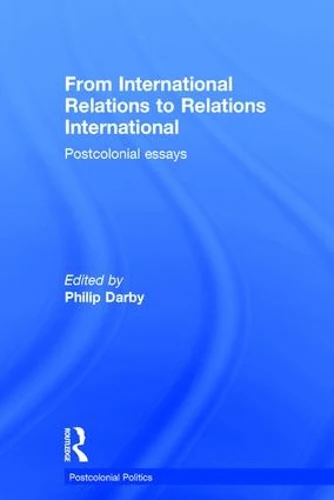
From International Relations to Relations International
This book brings postcolonial critique directly to bear on established ways of theorising international relations. Its primary concern is with the non-European world and its relations with the North. In advancing an alternative conception of relations international, the book draws on alternative source material and different forms of writing. It also features short stories, an interview, and explores the role of poetics and performance.
The suzerainty of the disciplinary writ is challenged on three primary grounds. Firstly, on its Eurocentrism, which leads the discipline to pass lightly over the distinctive life experiences of most of the world’s people. Secondly, on the discipline’s failure to engage in any systematic way with other bodies of knowledge about the international, such as international political economy, postcolonialism, and development. Lastly, it confronts the ‘top down’ nature of the politics of the discipline, seldom addressing everyday life.
From squatter towns to the evasions of the poor, from law through to literature, this work raises a number of problems for international relations. It challenges a colonial mindset, de-centres the West, and opens the field to new approaches that are far more inter-disciplinary than international relations generally allows. It is a provocative contribution for students and scholars of IR and postcolonial studies alike.
This book brings postcolonial critique directly to bear on established ways of theorising international relations. Its primary concern is with the non-European world and its relations with the North. In advancing an alternative conception of relations international, the book draws on alternative source material and different forms of writing. It also features short stories, an interview, and explores the role of poetics and performance.
The suzerainty of the disciplinary writ is challenged on three primary grounds. Firstly, on its Eurocentrism, which leads the discipline to pass lightly over the distinctive life experiences of most of the world’s people. Secondly, on the discipline’s failure to engage in any systematic way with other bodies of knowledge about the international, such as international political economy, postcolonialism, and development. Lastly, it confronts the ‘top down’ nature of the politics of the discipline, seldom addressing everyday life.
From squatter towns to the evasions of the poor, from law through to literature, this work raises a number of problems for international relations. It challenges a colonial mindset, de-centres the West, and opens the field to new approaches that are far more inter-disciplinary than international relations generally allows. It is a provocative contribution for students and scholars of IR and postcolonial studies alike.
Original: $122.20
-65%$122.20
$42.77Description
This book brings postcolonial critique directly to bear on established ways of theorising international relations. Its primary concern is with the non-European world and its relations with the North. In advancing an alternative conception of relations international, the book draws on alternative source material and different forms of writing. It also features short stories, an interview, and explores the role of poetics and performance.
The suzerainty of the disciplinary writ is challenged on three primary grounds. Firstly, on its Eurocentrism, which leads the discipline to pass lightly over the distinctive life experiences of most of the world’s people. Secondly, on the discipline’s failure to engage in any systematic way with other bodies of knowledge about the international, such as international political economy, postcolonialism, and development. Lastly, it confronts the ‘top down’ nature of the politics of the discipline, seldom addressing everyday life.
From squatter towns to the evasions of the poor, from law through to literature, this work raises a number of problems for international relations. It challenges a colonial mindset, de-centres the West, and opens the field to new approaches that are far more inter-disciplinary than international relations generally allows. It is a provocative contribution for students and scholars of IR and postcolonial studies alike.