GIS and the Social Sciences
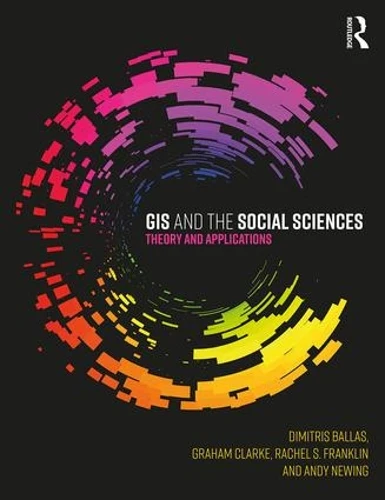
GIS and the Social Sciences offers a uniquely social science approach on the theory and application of GIS with a range of modern examples. It explores how human geography can engage with a variety of important policy issues through linking together GIS and spatial analysis, demonstrating the importance of applied GIS and spatial analysis for solving real-world problems in both the public and private sectors.
The book introduces basic theoretical material from a social science perspective and discusses how data are handled in GIS, what the standard commands within GIS packages are, and what they can offer in terms of spatial analysis. It covers the range of applications for which GIS has been primarily used in the social sciences, offering a global perspective of examples at a range of spatial scales. The book explores the use of GIS in fields such as crime, health, education, retail location, urban planning, transport, geodemographics, emergency planning, and poverty/income inequalities. It is supplemented with practical activities and datasets linked to the content of each chapter, provided on an eResource page. The examples are written using ArcMap to show how users can access data and apply the theory from the textbook using proprietary GIS software.
This book serves as a useful guide to a social science approach to GIS techniques and applications. It provides a range of modern applications of GIS with associated practicals to work through and demonstrates how researchers and policymakers alike can use GIS to plan services more effectively. It will be of great interest to geographers as well as to the broader social sciences, including sociology, crime science, health, business, and marketing.
GIS and the Social Sciences offers a uniquely social science approach on the theory and application of GIS with a range of modern examples. It explores how human geography can engage with a variety of important policy issues through linking together GIS and spatial analysis, demonstrating the importance of applied GIS and spatial analysis for solving real-world problems in both the public and private sectors.
The book introduces basic theoretical material from a social science perspective and discusses how data are handled in GIS, what the standard commands within GIS packages are, and what they can offer in terms of spatial analysis. It covers the range of applications for which GIS has been primarily used in the social sciences, offering a global perspective of examples at a range of spatial scales. The book explores the use of GIS in fields such as crime, health, education, retail location, urban planning, transport, geodemographics, emergency planning, and poverty/income inequalities. It is supplemented with practical activities and datasets linked to the content of each chapter, provided on an eResource page. The examples are written using ArcMap to show how users can access data and apply the theory from the textbook using proprietary GIS software.
This book serves as a useful guide to a social science approach to GIS techniques and applications. It provides a range of modern applications of GIS with associated practicals to work through and demonstrates how researchers and policymakers alike can use GIS to plan services more effectively. It will be of great interest to geographers as well as to the broader social sciences, including sociology, crime science, health, business, and marketing.
Description
GIS and the Social Sciences offers a uniquely social science approach on the theory and application of GIS with a range of modern examples. It explores how human geography can engage with a variety of important policy issues through linking together GIS and spatial analysis, demonstrating the importance of applied GIS and spatial analysis for solving real-world problems in both the public and private sectors.
The book introduces basic theoretical material from a social science perspective and discusses how data are handled in GIS, what the standard commands within GIS packages are, and what they can offer in terms of spatial analysis. It covers the range of applications for which GIS has been primarily used in the social sciences, offering a global perspective of examples at a range of spatial scales. The book explores the use of GIS in fields such as crime, health, education, retail location, urban planning, transport, geodemographics, emergency planning, and poverty/income inequalities. It is supplemented with practical activities and datasets linked to the content of each chapter, provided on an eResource page. The examples are written using ArcMap to show how users can access data and apply the theory from the textbook using proprietary GIS software.
This book serves as a useful guide to a social science approach to GIS techniques and applications. It provides a range of modern applications of GIS with associated practicals to work through and demonstrates how researchers and policymakers alike can use GIS to plan services more effectively. It will be of great interest to geographers as well as to the broader social sciences, including sociology, crime science, health, business, and marketing.