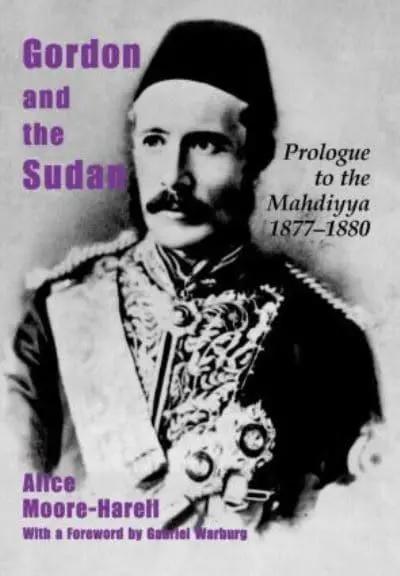
Gordon and the Sudan
The focus of this book is the leadership of Charles George Gordon, the governor-general of the Sudan, during the Turkiyya period (1821-85). The book analyses his administration and the political, economic and social developments under his leadership against a background of political unrest in Egypt and the weakening of Khedive Ismail's position in the face of increasing European financial imperialism.
All aspects of his administration are looked at, based upon primary sources from archives in Europe, the United States, and Egypt. This study argues that the period was one of continuity and change, and that, besides the escalating struggle against the slave trade, the fundamental causes of the Madhist revolution were all in place well before 1877. Gordon's fight against the slave traders added another dimension to existing Sudanese opposition to the Turco-Egyptian colonial rule. His authoritarian behaviour is also looked at as serving as a deterrent to the outbreak of the revolt.
Gordon and the Sudan provides an insightful analysis of these complex historical events, showcasing the intricate interplay of power, politics, and social issues of the time.
The focus of this book is the leadership of Charles George Gordon, the governor-general of the Sudan, during the Turkiyya period (1821-85). The book analyses his administration and the political, economic and social developments under his leadership against a background of political unrest in Egypt and the weakening of Khedive Ismail's position in the face of increasing European financial imperialism.
All aspects of his administration are looked at, based upon primary sources from archives in Europe, the United States, and Egypt. This study argues that the period was one of continuity and change, and that, besides the escalating struggle against the slave trade, the fundamental causes of the Madhist revolution were all in place well before 1877. Gordon's fight against the slave traders added another dimension to existing Sudanese opposition to the Turco-Egyptian colonial rule. His authoritarian behaviour is also looked at as serving as a deterrent to the outbreak of the revolt.
Gordon and the Sudan provides an insightful analysis of these complex historical events, showcasing the intricate interplay of power, politics, and social issues of the time.
Description
The focus of this book is the leadership of Charles George Gordon, the governor-general of the Sudan, during the Turkiyya period (1821-85). The book analyses his administration and the political, economic and social developments under his leadership against a background of political unrest in Egypt and the weakening of Khedive Ismail's position in the face of increasing European financial imperialism.
All aspects of his administration are looked at, based upon primary sources from archives in Europe, the United States, and Egypt. This study argues that the period was one of continuity and change, and that, besides the escalating struggle against the slave trade, the fundamental causes of the Madhist revolution were all in place well before 1877. Gordon's fight against the slave traders added another dimension to existing Sudanese opposition to the Turco-Egyptian colonial rule. His authoritarian behaviour is also looked at as serving as a deterrent to the outbreak of the revolt.
Gordon and the Sudan provides an insightful analysis of these complex historical events, showcasing the intricate interplay of power, politics, and social issues of the time.