Helping Hands
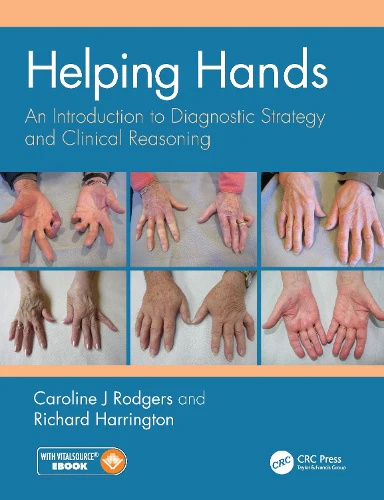
Helping Hands introduces medical students, junior doctors, medical educators, and allied health professionals to the vital skills of diagnostic strategy and clinical reasoning—both essential components of becoming an effective clinician. Using the examination of the hands as a springboard, often the initial step in physical examination and from which a wealth of information can be gleaned, real-life clinical cases encourage readers to refine their powers of observation and decision-making strategy.
Key features:
- Encourages a conscious approach to clinical reasoning—‘see’ rather than just ‘look’.
- Develops an understanding of why all clinicians can be responsible for diagnostic mistakes and how, with raised awareness, they can work towards avoiding error.
- Outlines approaches that can be used when taking a history and when examining patients in any clinical setting.
- Bundled e-book for use ‘on the go’, while the companion website provides additional materials for students and lecturers, including self-assessment questions and teaching guidance.
By outlining the process of formulating and refining an initial diagnosis, Helping Hands enables medical students or junior doctors to develop a critical self-awareness of the strategies they employ in assessing patients. This book guides them in learning how to improve and enhance their skills and feel enabled to craft an appropriate management plan.
Helping Hands introduces medical students, junior doctors, medical educators, and allied health professionals to the vital skills of diagnostic strategy and clinical reasoning—both essential components of becoming an effective clinician. Using the examination of the hands as a springboard, often the initial step in physical examination and from which a wealth of information can be gleaned, real-life clinical cases encourage readers to refine their powers of observation and decision-making strategy.
Key features:
- Encourages a conscious approach to clinical reasoning—‘see’ rather than just ‘look’.
- Develops an understanding of why all clinicians can be responsible for diagnostic mistakes and how, with raised awareness, they can work towards avoiding error.
- Outlines approaches that can be used when taking a history and when examining patients in any clinical setting.
- Bundled e-book for use ‘on the go’, while the companion website provides additional materials for students and lecturers, including self-assessment questions and teaching guidance.
By outlining the process of formulating and refining an initial diagnosis, Helping Hands enables medical students or junior doctors to develop a critical self-awareness of the strategies they employ in assessing patients. This book guides them in learning how to improve and enhance their skills and feel enabled to craft an appropriate management plan.
Description
Helping Hands introduces medical students, junior doctors, medical educators, and allied health professionals to the vital skills of diagnostic strategy and clinical reasoning—both essential components of becoming an effective clinician. Using the examination of the hands as a springboard, often the initial step in physical examination and from which a wealth of information can be gleaned, real-life clinical cases encourage readers to refine their powers of observation and decision-making strategy.
Key features:
- Encourages a conscious approach to clinical reasoning—‘see’ rather than just ‘look’.
- Develops an understanding of why all clinicians can be responsible for diagnostic mistakes and how, with raised awareness, they can work towards avoiding error.
- Outlines approaches that can be used when taking a history and when examining patients in any clinical setting.
- Bundled e-book for use ‘on the go’, while the companion website provides additional materials for students and lecturers, including self-assessment questions and teaching guidance.
By outlining the process of formulating and refining an initial diagnosis, Helping Hands enables medical students or junior doctors to develop a critical self-awareness of the strategies they employ in assessing patients. This book guides them in learning how to improve and enhance their skills and feel enabled to craft an appropriate management plan.