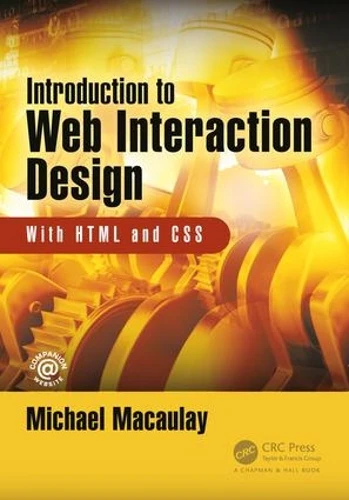
Introduction to Web Interaction Design
This book introduces standard and new HTML5 elements and attributes, along with CSS3 properties commonly used in web design, as well as design guidelines for their effective use. Its approach of explaining every line of code in the examples it uses to showcase the usage of the HTML elements and CSS properties makes it an invaluable web design resource for beginners, as well as intermediates looking to fill gaps in their knowledge.
In addition, the inclusion of user-centered design process stages and how they are best managed in website development makes the book unique in its area. Also, the book's approach of including challenges after each topic to help refresh readers' knowledge, as well as make them think, ensures that there are ample activities to keep learners motivated and engaged.
Key Features
- Comprehensively covers standard and new HTML5 elements and attributes, as well as CSS3 properties.
- Includes numerous challenges/exercises; one after each HTML element or CSS property introduced and demonstrated with examples.
- Example codes can be copied and pasted as-is to implement and experiment with.
- For every HTML element or CSS property introduced, guidelines are provided, where relevant, on how to best use them in a design to enhance usability and accessibility.
- Includes comprehensive explanations of flexible box and grid layout models and how to use them to create responsive and adaptive web designs.
- Covers the importance of visual aesthetics in design, including design elements and principles, and examples of how they can be applied in web design to produce good user experience.
- Includes comprehensive guidelines on how to design for standard and mobile screens, including the discussion of touch gesture interaction design and standard gestures, and the functions for which they are most commonly used.
- Introduces the stages of the user-centered design process, including web accessibility and user-experience testing, and managerial aspects of web development, such as intellectual property.
- Provides a brief introduction on making HTML and CSS codes more compact and efficient, and how to combine them with other languages commonly used in web design and development, such as JavaScript, AJAX, and PHP.
This book introduces standard and new HTML5 elements and attributes, along with CSS3 properties commonly used in web design, as well as design guidelines for their effective use. Its approach of explaining every line of code in the examples it uses to showcase the usage of the HTML elements and CSS properties makes it an invaluable web design resource for beginners, as well as intermediates looking to fill gaps in their knowledge.
In addition, the inclusion of user-centered design process stages and how they are best managed in website development makes the book unique in its area. Also, the book's approach of including challenges after each topic to help refresh readers' knowledge, as well as make them think, ensures that there are ample activities to keep learners motivated and engaged.
Key Features
- Comprehensively covers standard and new HTML5 elements and attributes, as well as CSS3 properties.
- Includes numerous challenges/exercises; one after each HTML element or CSS property introduced and demonstrated with examples.
- Example codes can be copied and pasted as-is to implement and experiment with.
- For every HTML element or CSS property introduced, guidelines are provided, where relevant, on how to best use them in a design to enhance usability and accessibility.
- Includes comprehensive explanations of flexible box and grid layout models and how to use them to create responsive and adaptive web designs.
- Covers the importance of visual aesthetics in design, including design elements and principles, and examples of how they can be applied in web design to produce good user experience.
- Includes comprehensive guidelines on how to design for standard and mobile screens, including the discussion of touch gesture interaction design and standard gestures, and the functions for which they are most commonly used.
- Introduces the stages of the user-centered design process, including web accessibility and user-experience testing, and managerial aspects of web development, such as intellectual property.
- Provides a brief introduction on making HTML and CSS codes more compact and efficient, and how to combine them with other languages commonly used in web design and development, such as JavaScript, AJAX, and PHP.
Original: $87.04
-65%$87.04
$30.46Description
This book introduces standard and new HTML5 elements and attributes, along with CSS3 properties commonly used in web design, as well as design guidelines for their effective use. Its approach of explaining every line of code in the examples it uses to showcase the usage of the HTML elements and CSS properties makes it an invaluable web design resource for beginners, as well as intermediates looking to fill gaps in their knowledge.
In addition, the inclusion of user-centered design process stages and how they are best managed in website development makes the book unique in its area. Also, the book's approach of including challenges after each topic to help refresh readers' knowledge, as well as make them think, ensures that there are ample activities to keep learners motivated and engaged.
Key Features
- Comprehensively covers standard and new HTML5 elements and attributes, as well as CSS3 properties.
- Includes numerous challenges/exercises; one after each HTML element or CSS property introduced and demonstrated with examples.
- Example codes can be copied and pasted as-is to implement and experiment with.
- For every HTML element or CSS property introduced, guidelines are provided, where relevant, on how to best use them in a design to enhance usability and accessibility.
- Includes comprehensive explanations of flexible box and grid layout models and how to use them to create responsive and adaptive web designs.
- Covers the importance of visual aesthetics in design, including design elements and principles, and examples of how they can be applied in web design to produce good user experience.
- Includes comprehensive guidelines on how to design for standard and mobile screens, including the discussion of touch gesture interaction design and standard gestures, and the functions for which they are most commonly used.
- Introduces the stages of the user-centered design process, including web accessibility and user-experience testing, and managerial aspects of web development, such as intellectual property.
- Provides a brief introduction on making HTML and CSS codes more compact and efficient, and how to combine them with other languages commonly used in web design and development, such as JavaScript, AJAX, and PHP.