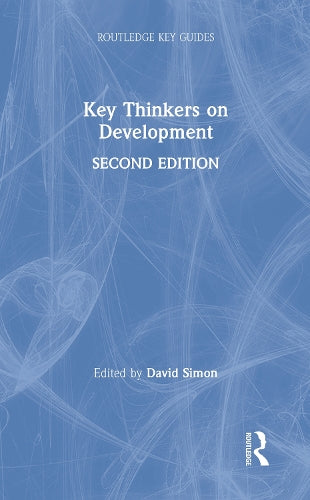
Key Thinkers on Development
Since its publication in 2006 as Fifty Key Thinkers on Development, this invaluable reference has established itself as the leading biographical handbook in its field, providing a concise and accessible introduction to the lives and key contributions of development thinkers from across the ideological and disciplinary spectrum. This substantially expanded and fully updated second edition in the relaunched series, without the numerical constraint, includes an additional 24 essays, filling in many gaps in the original selection, greatly improving the gender balance and diversifying coverage to reflect the evolving landscape of development in theory, policy and practice.
It presents a unique guide to the lives, ideas, and practices of leading contributors to the contested terrain of development studies and development policy and practice. Its thoughtful essays reflect the diversity of development in theory, policy, and practice across time, space, disciplines, and communities of practice. Accordingly, it challenges Western-centrism, Orientalism, and the like, while also demonstrating the enduring appeal of development in different guises. David Simon has assembled a highly authoritative team of contributors from different backgrounds, regional settings, and disciplines to reflect on the lives and contributions of leading authorities on development from around the world. These include:
- Modernisers like Kindleberger, Perroux, and Rostow
- Dependencistas such as Frank, Furtado, Cardoso, and Amin
- Progressives and critical modernists like Hirschman, Prebisch, Helleiner, Sen, Streeten, and Wang
- Political leaders enunciating radical alternative visions of development, such as Mao, Nkrumah, and Nyerere
- Progenitors of religiously or spiritually inspired development, such as Gandhi, Ariyaratne, and Vivekananda
- Development–environment thinkers like Agarwal, Blaikie, Brookfield, Ostrom, and Sachs
- International institution builders like Singer, Hammarsköld, Kaul, and Ul Haq
- Anti- and post-development thinkers and activists like Escobar, Ghosh, Quijano, and Roy
Key Thinkers on Development is therefore the essential handbook on the world’s most influential development thinkers and an invaluable guide for students of development and sustainability, policy-makers, and practitioners seeking an accessible overview of this diverse field and its leading voices.
Since its publication in 2006 as Fifty Key Thinkers on Development, this invaluable reference has established itself as the leading biographical handbook in its field, providing a concise and accessible introduction to the lives and key contributions of development thinkers from across the ideological and disciplinary spectrum. This substantially expanded and fully updated second edition in the relaunched series, without the numerical constraint, includes an additional 24 essays, filling in many gaps in the original selection, greatly improving the gender balance and diversifying coverage to reflect the evolving landscape of development in theory, policy and practice.
It presents a unique guide to the lives, ideas, and practices of leading contributors to the contested terrain of development studies and development policy and practice. Its thoughtful essays reflect the diversity of development in theory, policy, and practice across time, space, disciplines, and communities of practice. Accordingly, it challenges Western-centrism, Orientalism, and the like, while also demonstrating the enduring appeal of development in different guises. David Simon has assembled a highly authoritative team of contributors from different backgrounds, regional settings, and disciplines to reflect on the lives and contributions of leading authorities on development from around the world. These include:
- Modernisers like Kindleberger, Perroux, and Rostow
- Dependencistas such as Frank, Furtado, Cardoso, and Amin
- Progressives and critical modernists like Hirschman, Prebisch, Helleiner, Sen, Streeten, and Wang
- Political leaders enunciating radical alternative visions of development, such as Mao, Nkrumah, and Nyerere
- Progenitors of religiously or spiritually inspired development, such as Gandhi, Ariyaratne, and Vivekananda
- Development–environment thinkers like Agarwal, Blaikie, Brookfield, Ostrom, and Sachs
- International institution builders like Singer, Hammarsköld, Kaul, and Ul Haq
- Anti- and post-development thinkers and activists like Escobar, Ghosh, Quijano, and Roy
Key Thinkers on Development is therefore the essential handbook on the world’s most influential development thinkers and an invaluable guide for students of development and sustainability, policy-makers, and practitioners seeking an accessible overview of this diverse field and its leading voices.
Description
Since its publication in 2006 as Fifty Key Thinkers on Development, this invaluable reference has established itself as the leading biographical handbook in its field, providing a concise and accessible introduction to the lives and key contributions of development thinkers from across the ideological and disciplinary spectrum. This substantially expanded and fully updated second edition in the relaunched series, without the numerical constraint, includes an additional 24 essays, filling in many gaps in the original selection, greatly improving the gender balance and diversifying coverage to reflect the evolving landscape of development in theory, policy and practice.
It presents a unique guide to the lives, ideas, and practices of leading contributors to the contested terrain of development studies and development policy and practice. Its thoughtful essays reflect the diversity of development in theory, policy, and practice across time, space, disciplines, and communities of practice. Accordingly, it challenges Western-centrism, Orientalism, and the like, while also demonstrating the enduring appeal of development in different guises. David Simon has assembled a highly authoritative team of contributors from different backgrounds, regional settings, and disciplines to reflect on the lives and contributions of leading authorities on development from around the world. These include:
- Modernisers like Kindleberger, Perroux, and Rostow
- Dependencistas such as Frank, Furtado, Cardoso, and Amin
- Progressives and critical modernists like Hirschman, Prebisch, Helleiner, Sen, Streeten, and Wang
- Political leaders enunciating radical alternative visions of development, such as Mao, Nkrumah, and Nyerere
- Progenitors of religiously or spiritually inspired development, such as Gandhi, Ariyaratne, and Vivekananda
- Development–environment thinkers like Agarwal, Blaikie, Brookfield, Ostrom, and Sachs
- International institution builders like Singer, Hammarsköld, Kaul, and Ul Haq
- Anti- and post-development thinkers and activists like Escobar, Ghosh, Quijano, and Roy
Key Thinkers on Development is therefore the essential handbook on the world’s most influential development thinkers and an invaluable guide for students of development and sustainability, policy-makers, and practitioners seeking an accessible overview of this diverse field and its leading voices.