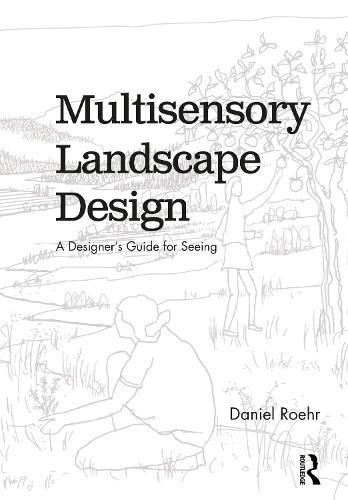
Multisensory Landscape Design
The interaction of our bodies in space is intrinsically linked to the ways in which we design. In spatial design, we tend to focus solely on the visual, often treating it as the dominant sense while ignoring the other four senses: touch, sound, smell, and taste.
While research has been carried out on the perception of multisensorial experiences and design in the last two decades, there is no combined resource on how to address multisensory design in landscape architecture, architecture, urban, and environmental design. Multisensory Landscape Design is a textbook for design students, professionals, and educators to develop multisensorial literacy.
This book is the first of its kind, providing introductions on each of the five senses, along with exercises that demonstrate how to observe, record, and visualise them. It explores current design school pedagogy and how we might imagine a more mindful way of teaching.
The book is a foundational resource for students, professionals, and instructors to understand and ultimately create multisensorial spaces that are inclusive for all. Multisensory Landscape Design imagines a world where seeing is redefined in a way that encompasses all of the senses—not just the visual.
The interaction of our bodies in space is intrinsically linked to the ways in which we design. In spatial design, we tend to focus solely on the visual, often treating it as the dominant sense while ignoring the other four senses: touch, sound, smell, and taste.
While research has been carried out on the perception of multisensorial experiences and design in the last two decades, there is no combined resource on how to address multisensory design in landscape architecture, architecture, urban, and environmental design. Multisensory Landscape Design is a textbook for design students, professionals, and educators to develop multisensorial literacy.
This book is the first of its kind, providing introductions on each of the five senses, along with exercises that demonstrate how to observe, record, and visualise them. It explores current design school pedagogy and how we might imagine a more mindful way of teaching.
The book is a foundational resource for students, professionals, and instructors to understand and ultimately create multisensorial spaces that are inclusive for all. Multisensory Landscape Design imagines a world where seeing is redefined in a way that encompasses all of the senses—not just the visual.
Original: $196.56
-65%$196.56
$68.80Description
The interaction of our bodies in space is intrinsically linked to the ways in which we design. In spatial design, we tend to focus solely on the visual, often treating it as the dominant sense while ignoring the other four senses: touch, sound, smell, and taste.
While research has been carried out on the perception of multisensorial experiences and design in the last two decades, there is no combined resource on how to address multisensory design in landscape architecture, architecture, urban, and environmental design. Multisensory Landscape Design is a textbook for design students, professionals, and educators to develop multisensorial literacy.
This book is the first of its kind, providing introductions on each of the five senses, along with exercises that demonstrate how to observe, record, and visualise them. It explores current design school pedagogy and how we might imagine a more mindful way of teaching.
The book is a foundational resource for students, professionals, and instructors to understand and ultimately create multisensorial spaces that are inclusive for all. Multisensory Landscape Design imagines a world where seeing is redefined in a way that encompasses all of the senses—not just the visual.