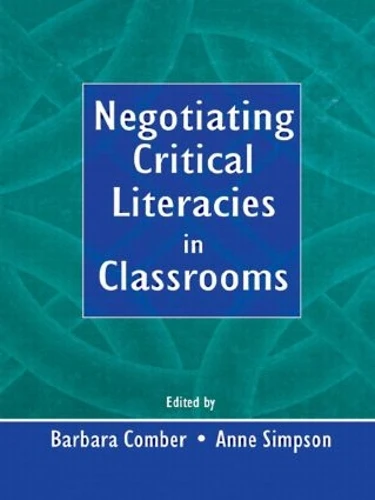
Negotiating Critical Literacies in Classrooms
This work brings together accounts of educators who have sought to make a difference in the lives of their students through literacy education—from university classrooms in the United States, England, and South Africa, to policy and curriculum development in Singapore and Australia. Each chapter represents the results of extended research on classroom practice.
The authors in this collection write as teachers. The literacy classrooms they explore range from the early years of schooling, to primary and secondary education, through to community and university sites. Although the volume is organised around different levels of education, clearly overlapping themes emerge across the chapters, including identity formation and textual practices, politicising curriculum and textbook production, and changing the power relations in classroom talk around text.
An overarching theme of this collection is the belief that there is no one generic, universal critical literacy—in theory or in practice. Rather, the authors reveal how a range of theories can serve as productive starting points for educators working on social justice agendas through the literacy curriculum, and, equally important, how particular critical literacy theories or pedagogies must be worked out in specific locations.
In each of these accounts, educators explain how they have taken a body of theory and worked with and on it in classrooms. Their rich portrayals and narratives of classroom realities illustrate the unanticipated effects of pedagogies that emerge in specific contexts. Experiences from the classrooms have led them to revise theories that are central to critical literacy, including constructs such as empowerment, resistance, and multiple readings.
This collection documents what occurs when educators confront the difficult ethical and political issues that evolve in particular classroom situations. Negotiating Critical Literacies in Classrooms provides a compelling exploration of how theory and practice intertwine in the pursuit of literacy education that serves social justice.
This work brings together accounts of educators who have sought to make a difference in the lives of their students through literacy education—from university classrooms in the United States, England, and South Africa, to policy and curriculum development in Singapore and Australia. Each chapter represents the results of extended research on classroom practice.
The authors in this collection write as teachers. The literacy classrooms they explore range from the early years of schooling, to primary and secondary education, through to community and university sites. Although the volume is organised around different levels of education, clearly overlapping themes emerge across the chapters, including identity formation and textual practices, politicising curriculum and textbook production, and changing the power relations in classroom talk around text.
An overarching theme of this collection is the belief that there is no one generic, universal critical literacy—in theory or in practice. Rather, the authors reveal how a range of theories can serve as productive starting points for educators working on social justice agendas through the literacy curriculum, and, equally important, how particular critical literacy theories or pedagogies must be worked out in specific locations.
In each of these accounts, educators explain how they have taken a body of theory and worked with and on it in classrooms. Their rich portrayals and narratives of classroom realities illustrate the unanticipated effects of pedagogies that emerge in specific contexts. Experiences from the classrooms have led them to revise theories that are central to critical literacy, including constructs such as empowerment, resistance, and multiple readings.
This collection documents what occurs when educators confront the difficult ethical and political issues that evolve in particular classroom situations. Negotiating Critical Literacies in Classrooms provides a compelling exploration of how theory and practice intertwine in the pursuit of literacy education that serves social justice.
Description
This work brings together accounts of educators who have sought to make a difference in the lives of their students through literacy education—from university classrooms in the United States, England, and South Africa, to policy and curriculum development in Singapore and Australia. Each chapter represents the results of extended research on classroom practice.
The authors in this collection write as teachers. The literacy classrooms they explore range from the early years of schooling, to primary and secondary education, through to community and university sites. Although the volume is organised around different levels of education, clearly overlapping themes emerge across the chapters, including identity formation and textual practices, politicising curriculum and textbook production, and changing the power relations in classroom talk around text.
An overarching theme of this collection is the belief that there is no one generic, universal critical literacy—in theory or in practice. Rather, the authors reveal how a range of theories can serve as productive starting points for educators working on social justice agendas through the literacy curriculum, and, equally important, how particular critical literacy theories or pedagogies must be worked out in specific locations.
In each of these accounts, educators explain how they have taken a body of theory and worked with and on it in classrooms. Their rich portrayals and narratives of classroom realities illustrate the unanticipated effects of pedagogies that emerge in specific contexts. Experiences from the classrooms have led them to revise theories that are central to critical literacy, including constructs such as empowerment, resistance, and multiple readings.
This collection documents what occurs when educators confront the difficult ethical and political issues that evolve in particular classroom situations. Negotiating Critical Literacies in Classrooms provides a compelling exploration of how theory and practice intertwine in the pursuit of literacy education that serves social justice.