Net-Positive Design and Sustainable Urban Development
Sustainable urban planning, policy and design often claim to address sustainability problems, yet they frequently lead to the depletion of resources, degradation of ecosystems, and exacerbate social disparities by concentrating wealth. Positive Development theory argues that development has the potential to generate more net ecological and social benefits than not constructing anything at all. This theory elucidates how current conceptual, physical, and institutional frameworks inherently compromise the preservation and enhancement of social and natural life-support systems. It proposes concrete reforms in planning, design, and decision-making to foster development that expands future options and enhances social and natural life-support systems in absolute terms.
Net-Positive Design and Sustainable Urban Development is directed at students, academics, professionals, and sustainability advocates who question the ineffectiveness of existing approaches. This book elucidates how to amend the anti-ecological biases ingrained in the current frameworks of environmental governance, planning, decision-making, and design, and suggests pragmatic methods for implementing these changes. Cities can bolster both the ‘public estate’—by reducing social stratification, inequity, and other conflict causes, and by enhancing environmental quality, wellbeing, and access to fundamental needs—and the ‘ecological base’—by sequestering more carbon, producing more energy than is consumed during construction and operation, and increasing ecological space to support ecological carrying capacity, ecosystem functions and services, while restoring bioregions and wilderness.
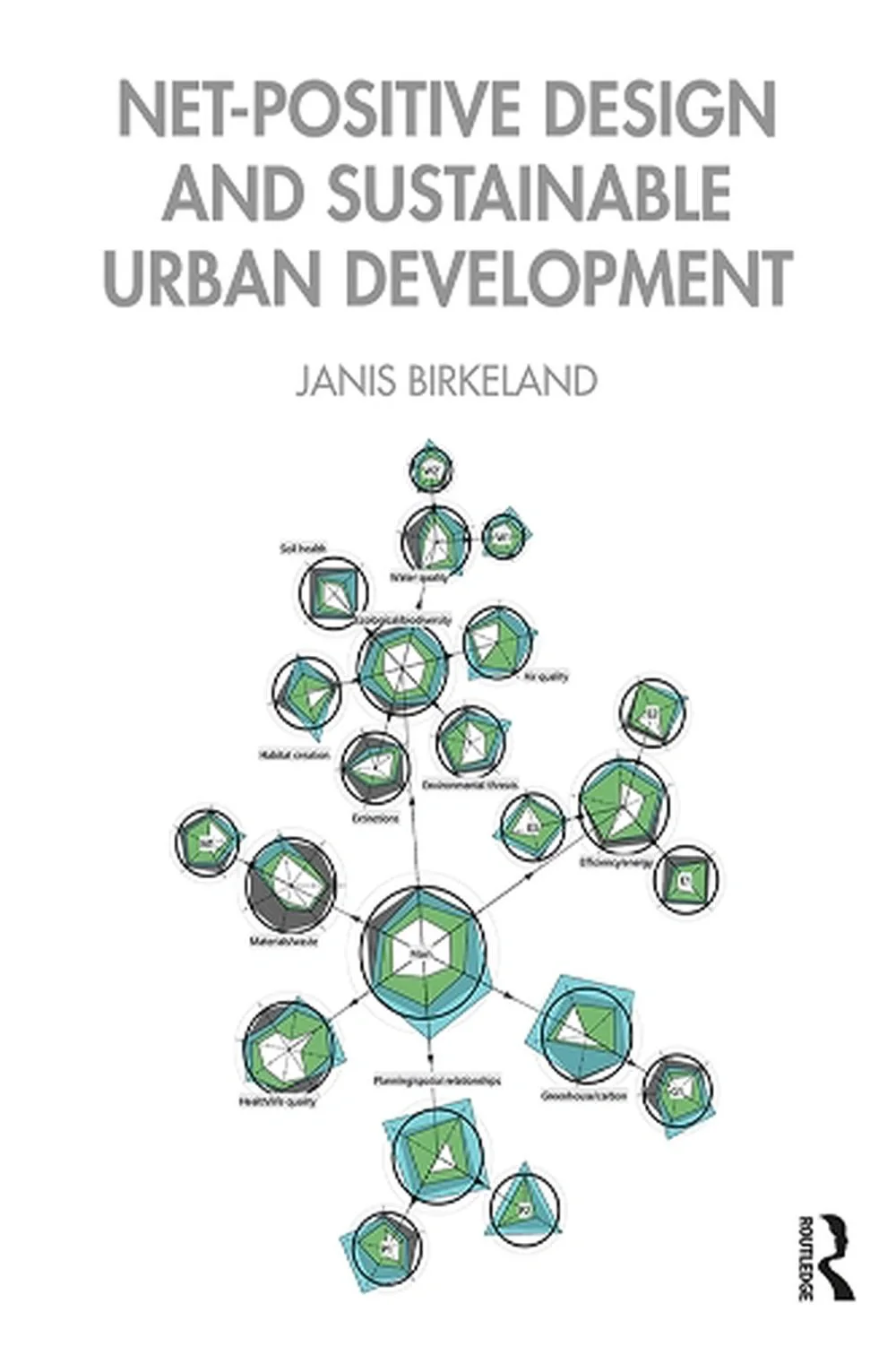
No small task, this groundbreaking book provides both academic theory and professional tools to contribute to saving the planet, including a free computer app for net-positive design.
Sustainable urban planning, policy and design often claim to address sustainability problems, yet they frequently lead to the depletion of resources, degradation of ecosystems, and exacerbate social disparities by concentrating wealth. Positive Development theory argues that development has the potential to generate more net ecological and social benefits than not constructing anything at all. This theory elucidates how current conceptual, physical, and institutional frameworks inherently compromise the preservation and enhancement of social and natural life-support systems. It proposes concrete reforms in planning, design, and decision-making to foster development that expands future options and enhances social and natural life-support systems in absolute terms.
Net-Positive Design and Sustainable Urban Development is directed at students, academics, professionals, and sustainability advocates who question the ineffectiveness of existing approaches. This book elucidates how to amend the anti-ecological biases ingrained in the current frameworks of environmental governance, planning, decision-making, and design, and suggests pragmatic methods for implementing these changes. Cities can bolster both the ‘public estate’—by reducing social stratification, inequity, and other conflict causes, and by enhancing environmental quality, wellbeing, and access to fundamental needs—and the ‘ecological base’—by sequestering more carbon, producing more energy than is consumed during construction and operation, and increasing ecological space to support ecological carrying capacity, ecosystem functions and services, while restoring bioregions and wilderness.
No small task, this groundbreaking book provides both academic theory and professional tools to contribute to saving the planet, including a free computer app for net-positive design.
Description
Sustainable urban planning, policy and design often claim to address sustainability problems, yet they frequently lead to the depletion of resources, degradation of ecosystems, and exacerbate social disparities by concentrating wealth. Positive Development theory argues that development has the potential to generate more net ecological and social benefits than not constructing anything at all. This theory elucidates how current conceptual, physical, and institutional frameworks inherently compromise the preservation and enhancement of social and natural life-support systems. It proposes concrete reforms in planning, design, and decision-making to foster development that expands future options and enhances social and natural life-support systems in absolute terms.
Net-Positive Design and Sustainable Urban Development is directed at students, academics, professionals, and sustainability advocates who question the ineffectiveness of existing approaches. This book elucidates how to amend the anti-ecological biases ingrained in the current frameworks of environmental governance, planning, decision-making, and design, and suggests pragmatic methods for implementing these changes. Cities can bolster both the ‘public estate’—by reducing social stratification, inequity, and other conflict causes, and by enhancing environmental quality, wellbeing, and access to fundamental needs—and the ‘ecological base’—by sequestering more carbon, producing more energy than is consumed during construction and operation, and increasing ecological space to support ecological carrying capacity, ecosystem functions and services, while restoring bioregions and wilderness.
No small task, this groundbreaking book provides both academic theory and professional tools to contribute to saving the planet, including a free computer app for net-positive design.