On Medicine, Volume I
A. Cornelius Celsus was the author, probably during the reign of the Roman Emperor Tiberius (14–37 CE), of a general encyclopaedia of agriculture, medicine, military arts, rhetoric, philosophy, and jurisprudence, in that order of subjects. Of all this great work, there survives only the 8 books on medicine, De Medicina.
Book 1 includes an excellent survey of Greek schools (Dogmatic, Methodic, Empiric) of medicine, followed by sensible dietetics or health preservation, which will always be applicable. Book 2 deals with prognosis and the diagnosis of symptoms, which he stresses strongly, as well as general therapeutics. Book 3 covers internal ailments such as fevers and general diseases. Book 4 addresses local bodily diseases. Next come two pharmacological books: Book 5 discusses the treatment by drugs of general diseases, and Book 6 explores the treatment of local diseases. Books 7 and 8 deal with surgery, containing accounts of many operations, including amputation.
Celsus was not a professional doctor of medicine or a surgeon, but a practical layman. His On Medicine, written in a clear and neat style for lay readers, is partly a result of his medical treatment of his household (slaves included) and partly a presentation of information gained from many Greek authorities. From no other source can we learn so much about the condition of medical science up to his own time.
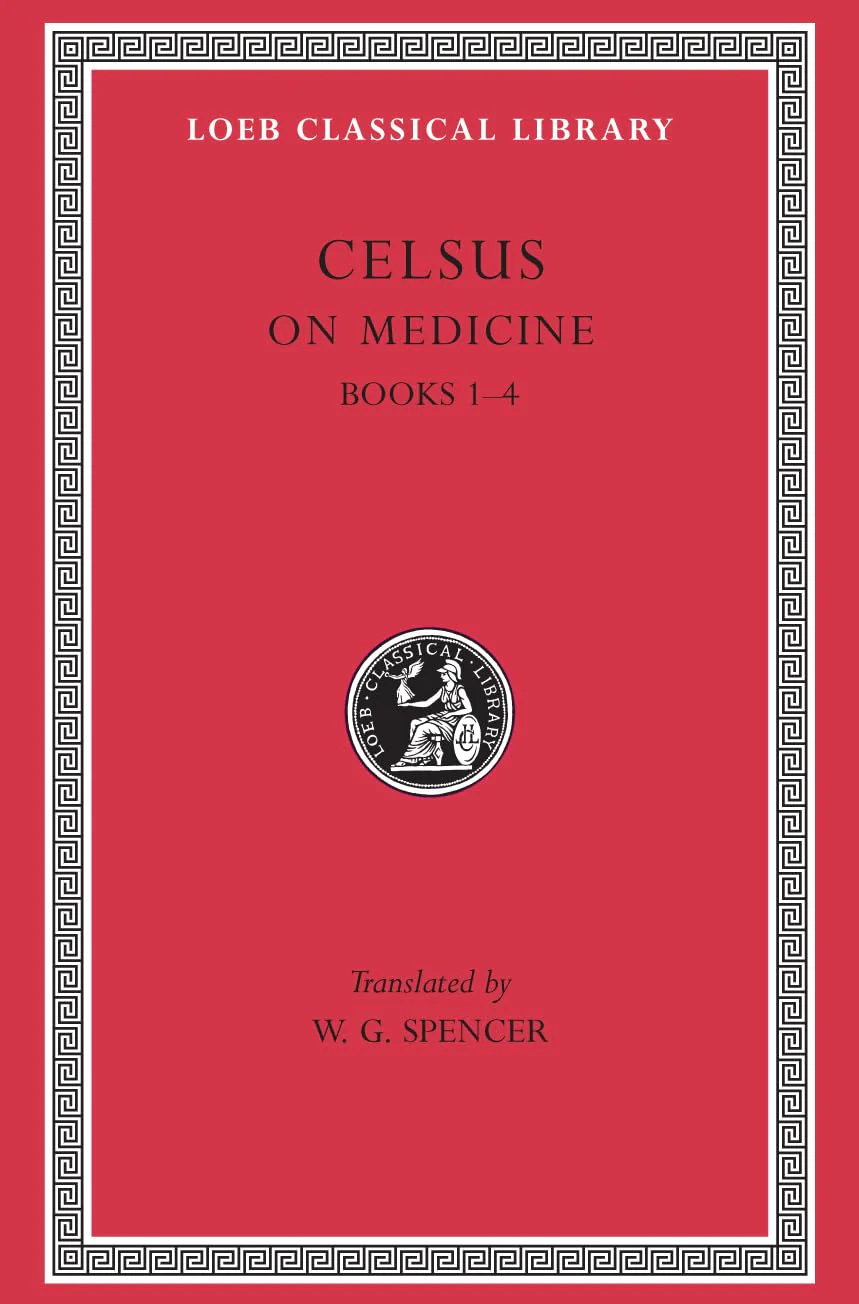
The Loeb Classical Library edition of Celsus is in three volumes.
A. Cornelius Celsus was the author, probably during the reign of the Roman Emperor Tiberius (14–37 CE), of a general encyclopaedia of agriculture, medicine, military arts, rhetoric, philosophy, and jurisprudence, in that order of subjects. Of all this great work, there survives only the 8 books on medicine, De Medicina.
Book 1 includes an excellent survey of Greek schools (Dogmatic, Methodic, Empiric) of medicine, followed by sensible dietetics or health preservation, which will always be applicable. Book 2 deals with prognosis and the diagnosis of symptoms, which he stresses strongly, as well as general therapeutics. Book 3 covers internal ailments such as fevers and general diseases. Book 4 addresses local bodily diseases. Next come two pharmacological books: Book 5 discusses the treatment by drugs of general diseases, and Book 6 explores the treatment of local diseases. Books 7 and 8 deal with surgery, containing accounts of many operations, including amputation.
Celsus was not a professional doctor of medicine or a surgeon, but a practical layman. His On Medicine, written in a clear and neat style for lay readers, is partly a result of his medical treatment of his household (slaves included) and partly a presentation of information gained from many Greek authorities. From no other source can we learn so much about the condition of medical science up to his own time.
The Loeb Classical Library edition of Celsus is in three volumes.
Description
A. Cornelius Celsus was the author, probably during the reign of the Roman Emperor Tiberius (14–37 CE), of a general encyclopaedia of agriculture, medicine, military arts, rhetoric, philosophy, and jurisprudence, in that order of subjects. Of all this great work, there survives only the 8 books on medicine, De Medicina.
Book 1 includes an excellent survey of Greek schools (Dogmatic, Methodic, Empiric) of medicine, followed by sensible dietetics or health preservation, which will always be applicable. Book 2 deals with prognosis and the diagnosis of symptoms, which he stresses strongly, as well as general therapeutics. Book 3 covers internal ailments such as fevers and general diseases. Book 4 addresses local bodily diseases. Next come two pharmacological books: Book 5 discusses the treatment by drugs of general diseases, and Book 6 explores the treatment of local diseases. Books 7 and 8 deal with surgery, containing accounts of many operations, including amputation.
Celsus was not a professional doctor of medicine or a surgeon, but a practical layman. His On Medicine, written in a clear and neat style for lay readers, is partly a result of his medical treatment of his household (slaves included) and partly a presentation of information gained from many Greek authorities. From no other source can we learn so much about the condition of medical science up to his own time.
The Loeb Classical Library edition of Celsus is in three volumes.