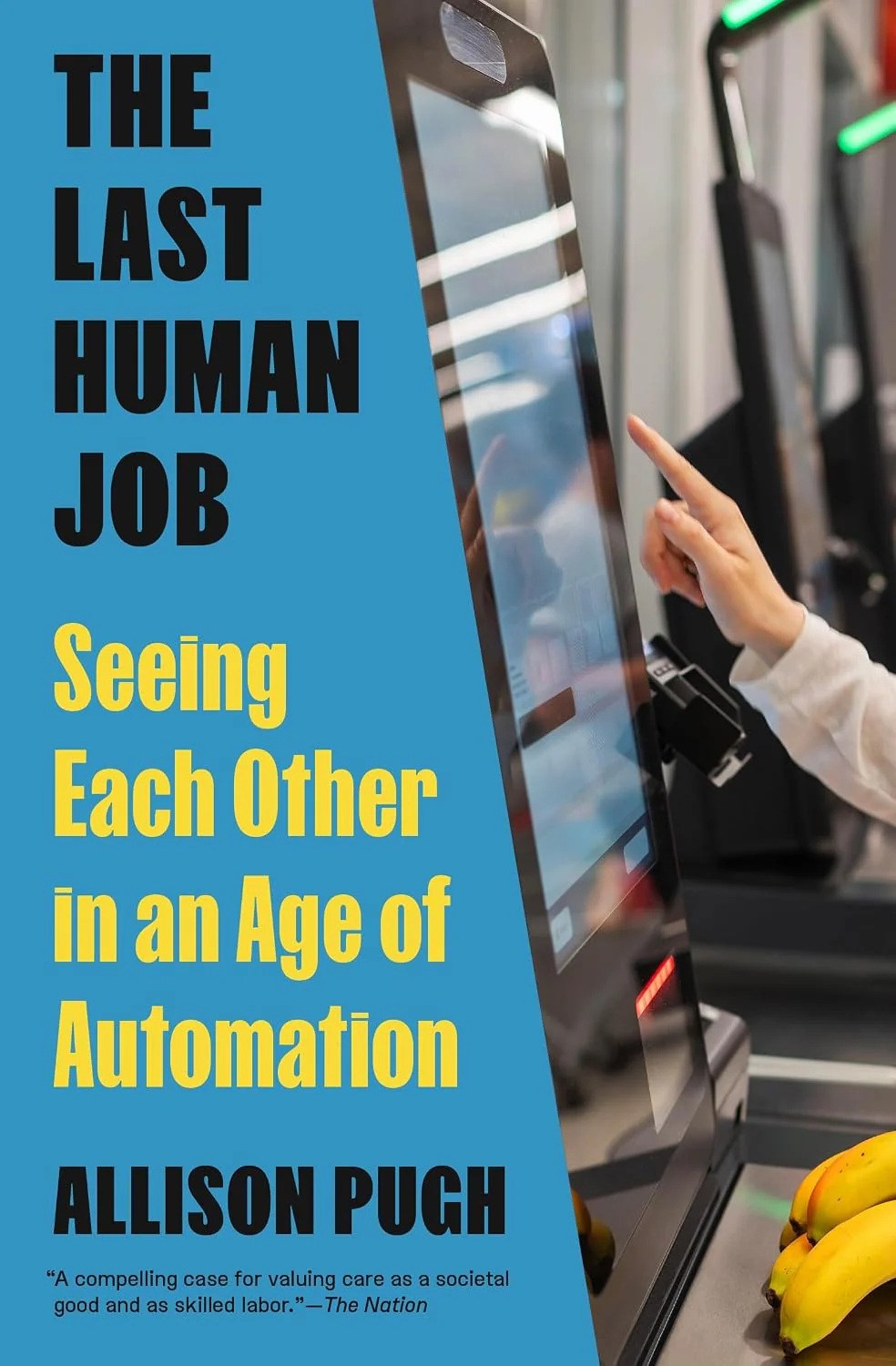
The Last Human Job
'A compelling case for valuing care as a societal good and as skilled labour.' The Nation
With the rapid development of artificial intelligence and labour-saving technologies like self-checkouts and automated factories, the future of work has never been more uncertain, and even jobs requiring high levels of human interaction are no longer safe. The Last Human Job explores the human connections that underlie our work, arguing that what people do for each other in these settings is valuable and worth preserving.
Drawing on in-depth interviews and observations with people in a broad range of professions from physicians, teachers, and coaches to chaplains, therapists, caregivers, and hairdressers Allison Pugh develops the concept of 'connective labour', a kind of work that relies on empathy, the spontaneity of human contact, and a mutual recognition of each other's humanity. The threats to connective labour are not only those posed by advances in AI or apps; Pugh demonstrates how profit-driven campaigns imposing industrial logic shrink the time for workers to connect, enforce new priorities of data and metrics, and introduce standardised practices that hinder our ability to truly see each other. She concludes with profiles of organisations where connective labour thrives, offering practical steps for building a social architecture that works.
Vividly illustrating how connective labor enriches the lives of individuals and binds our communities together, The Last Human Job is a compelling argument for us to recognise, value, and protect humane work in an increasingly automated and disconnected world.
'A compelling case for valuing care as a societal good and as skilled labour.' The Nation
With the rapid development of artificial intelligence and labour-saving technologies like self-checkouts and automated factories, the future of work has never been more uncertain, and even jobs requiring high levels of human interaction are no longer safe. The Last Human Job explores the human connections that underlie our work, arguing that what people do for each other in these settings is valuable and worth preserving.
Drawing on in-depth interviews and observations with people in a broad range of professions from physicians, teachers, and coaches to chaplains, therapists, caregivers, and hairdressers Allison Pugh develops the concept of 'connective labour', a kind of work that relies on empathy, the spontaneity of human contact, and a mutual recognition of each other's humanity. The threats to connective labour are not only those posed by advances in AI or apps; Pugh demonstrates how profit-driven campaigns imposing industrial logic shrink the time for workers to connect, enforce new priorities of data and metrics, and introduce standardised practices that hinder our ability to truly see each other. She concludes with profiles of organisations where connective labour thrives, offering practical steps for building a social architecture that works.
Vividly illustrating how connective labor enriches the lives of individuals and binds our communities together, The Last Human Job is a compelling argument for us to recognise, value, and protect humane work in an increasingly automated and disconnected world.
Description
'A compelling case for valuing care as a societal good and as skilled labour.' The Nation
With the rapid development of artificial intelligence and labour-saving technologies like self-checkouts and automated factories, the future of work has never been more uncertain, and even jobs requiring high levels of human interaction are no longer safe. The Last Human Job explores the human connections that underlie our work, arguing that what people do for each other in these settings is valuable and worth preserving.
Drawing on in-depth interviews and observations with people in a broad range of professions from physicians, teachers, and coaches to chaplains, therapists, caregivers, and hairdressers Allison Pugh develops the concept of 'connective labour', a kind of work that relies on empathy, the spontaneity of human contact, and a mutual recognition of each other's humanity. The threats to connective labour are not only those posed by advances in AI or apps; Pugh demonstrates how profit-driven campaigns imposing industrial logic shrink the time for workers to connect, enforce new priorities of data and metrics, and introduce standardised practices that hinder our ability to truly see each other. She concludes with profiles of organisations where connective labour thrives, offering practical steps for building a social architecture that works.
Vividly illustrating how connective labor enriches the lives of individuals and binds our communities together, The Last Human Job is a compelling argument for us to recognise, value, and protect humane work in an increasingly automated and disconnected world.