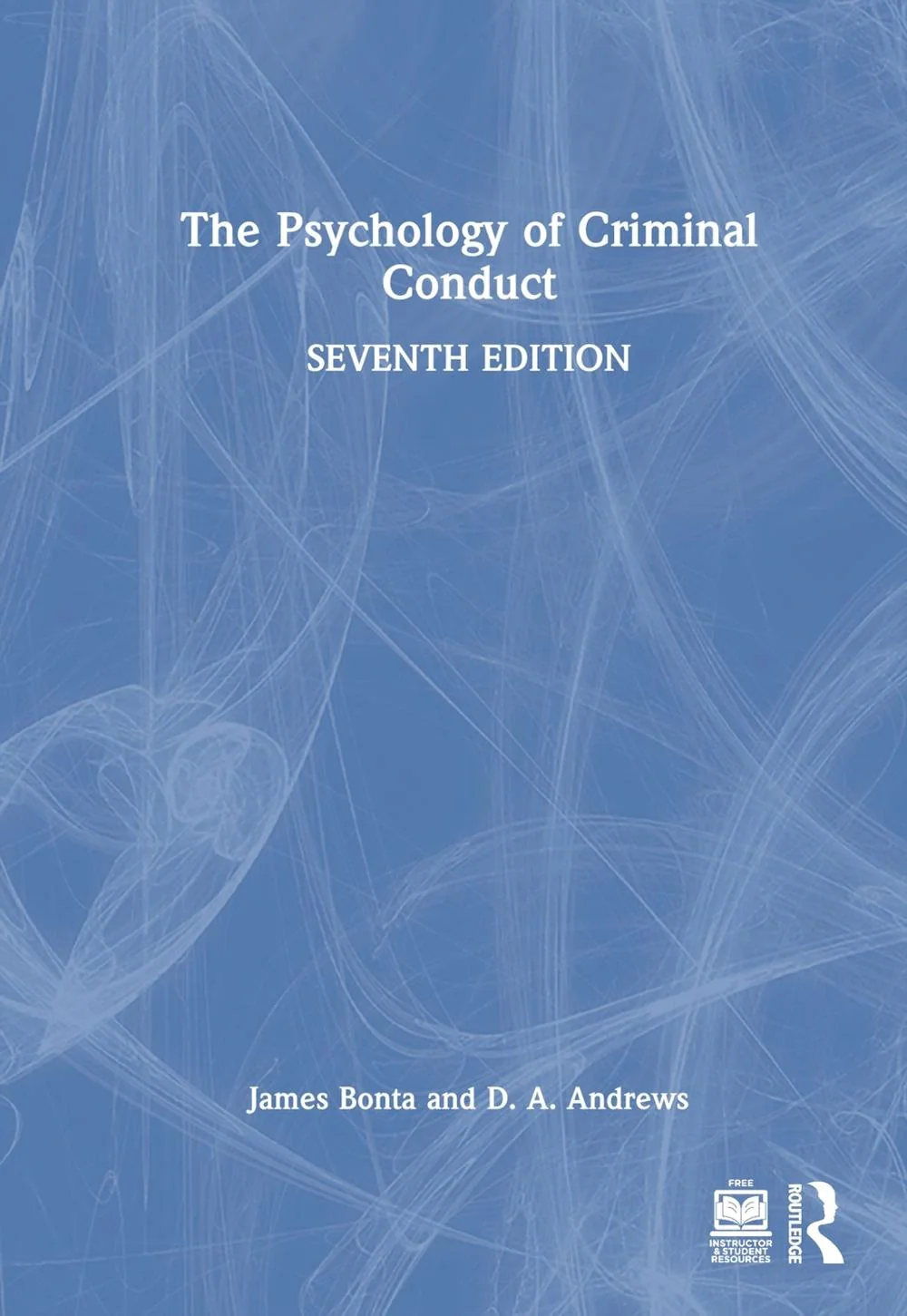
The Psychology of Criminal Conduct
The Psychology of Criminal Conduct, Seventh Edition, provides a psychological and evidence-informed perspective of criminal behaviour that sets it apart from many criminological and mental health explanations of criminal behaviour. Drawing upon the General Personality and Cognitive Social Learning theory, James Bonta and Donald Andrews offer an overview of the theoretical context and major knowledge base of the psychology of criminal conduct.
They discuss the eight major risk/need factors of criminal conduct, examine the prediction and classification of criminal behaviour along with prevention and rehabilitation, and summarise the major issues in understanding criminal conduct. This book also offers the Risk-Need-Responsivity (RNR) model of assessment and treatment that has guided developments in the subject throughout the world.
Bonta carefully maintains the book’s original contributions while presenting core concepts succinctly, clearly, and elegantly. Appropriate for advanced undergraduates and graduate students as well as for scholars, researchers, and practitioners, The Psychology of Criminal Conduct, Seventh Edition, further extends and refines the authors’ body of work.
The book is extended and enhanced by a website that includes:
- A curated selection of videos, webinars, and podcast episodes, bringing together diverse voices from leaders across the field of corrections and criminal psychology*
- Technical notes providing additional context and detail to concepts explored in the book*
- Interactive quizzes to test understanding and support study*
- Lecture slides, exercises, and test banks designed to save instructors time
*located under the Student Resources menu, organised by chapter
located under password-protected Instructor Resources
The Psychology of Criminal Conduct, Seventh Edition, provides a psychological and evidence-informed perspective of criminal behaviour that sets it apart from many criminological and mental health explanations of criminal behaviour. Drawing upon the General Personality and Cognitive Social Learning theory, James Bonta and Donald Andrews offer an overview of the theoretical context and major knowledge base of the psychology of criminal conduct.
They discuss the eight major risk/need factors of criminal conduct, examine the prediction and classification of criminal behaviour along with prevention and rehabilitation, and summarise the major issues in understanding criminal conduct. This book also offers the Risk-Need-Responsivity (RNR) model of assessment and treatment that has guided developments in the subject throughout the world.
Bonta carefully maintains the book’s original contributions while presenting core concepts succinctly, clearly, and elegantly. Appropriate for advanced undergraduates and graduate students as well as for scholars, researchers, and practitioners, The Psychology of Criminal Conduct, Seventh Edition, further extends and refines the authors’ body of work.
The book is extended and enhanced by a website that includes:
- A curated selection of videos, webinars, and podcast episodes, bringing together diverse voices from leaders across the field of corrections and criminal psychology*
- Technical notes providing additional context and detail to concepts explored in the book*
- Interactive quizzes to test understanding and support study*
- Lecture slides, exercises, and test banks designed to save instructors time
*located under the Student Resources menu, organised by chapter
located under password-protected Instructor Resources
Original: $352.19
-65%$352.19
$123.27Description
The Psychology of Criminal Conduct, Seventh Edition, provides a psychological and evidence-informed perspective of criminal behaviour that sets it apart from many criminological and mental health explanations of criminal behaviour. Drawing upon the General Personality and Cognitive Social Learning theory, James Bonta and Donald Andrews offer an overview of the theoretical context and major knowledge base of the psychology of criminal conduct.
They discuss the eight major risk/need factors of criminal conduct, examine the prediction and classification of criminal behaviour along with prevention and rehabilitation, and summarise the major issues in understanding criminal conduct. This book also offers the Risk-Need-Responsivity (RNR) model of assessment and treatment that has guided developments in the subject throughout the world.
Bonta carefully maintains the book’s original contributions while presenting core concepts succinctly, clearly, and elegantly. Appropriate for advanced undergraduates and graduate students as well as for scholars, researchers, and practitioners, The Psychology of Criminal Conduct, Seventh Edition, further extends and refines the authors’ body of work.
The book is extended and enhanced by a website that includes:
- A curated selection of videos, webinars, and podcast episodes, bringing together diverse voices from leaders across the field of corrections and criminal psychology*
- Technical notes providing additional context and detail to concepts explored in the book*
- Interactive quizzes to test understanding and support study*
- Lecture slides, exercises, and test banks designed to save instructors time
*located under the Student Resources menu, organised by chapter
located under password-protected Instructor Resources