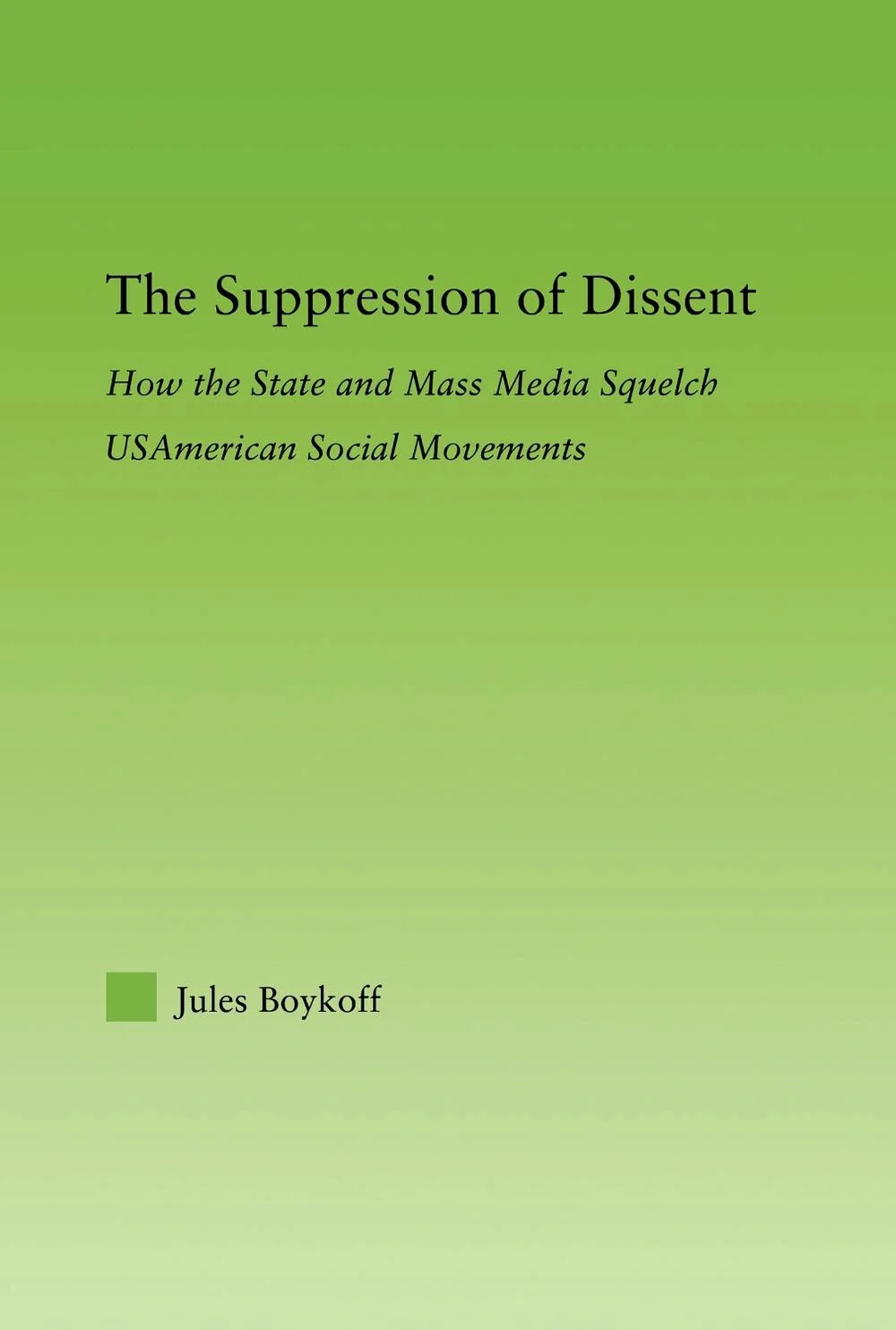
The Suppression of Dissent
Despite longstanding traditions of tolerance, inclusion, and democracy in the United States, dissident citizens and social movements have experienced significant and sustained—although often subtle and difficult to observe—suppression in this country.
Using mechanism-based social-movement theory, The Suppression of Dissent explores a wide range of twentieth century episodes of contention, involving such groups as mid-century communists, the Black Panther Party, the American Indian Movement, and the modern-day globalization movement.
Despite longstanding traditions of tolerance, inclusion, and democracy in the United States, dissident citizens and social movements have experienced significant and sustained—although often subtle and difficult to observe—suppression in this country.
Using mechanism-based social-movement theory, The Suppression of Dissent explores a wide range of twentieth century episodes of contention, involving such groups as mid-century communists, the Black Panther Party, the American Indian Movement, and the modern-day globalization movement.
Description
Despite longstanding traditions of tolerance, inclusion, and democracy in the United States, dissident citizens and social movements have experienced significant and sustained—although often subtle and difficult to observe—suppression in this country.
Using mechanism-based social-movement theory, The Suppression of Dissent explores a wide range of twentieth century episodes of contention, involving such groups as mid-century communists, the Black Panther Party, the American Indian Movement, and the modern-day globalization movement.