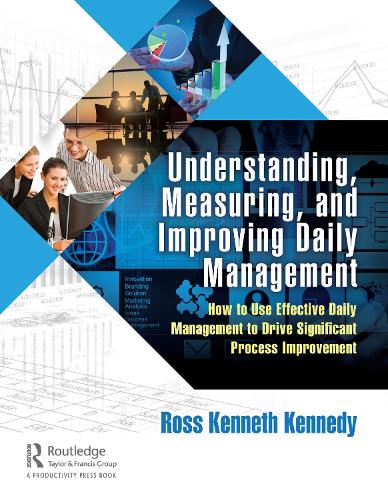
Understanding, Measuring, and Improving Daily Management
Understanding, Measuring, and Improving Daily Management explains the critical parts of a continuous improvement strategy to achieve Operational Excellence and where reactive improvement through effective daily management fits in. In addition, it shows the consequences to your Operational Excellence journey if daily management is not performed well.
Reactive improvement develops the capability and discipline within the organisation to rapidly recover from an event or incident that stops you from achieving your expected or target performance for the day, shift, or hour. Most importantly, it enhances your ability to capture learning and initiate corrective actions, ensuring the event or incident will not re-occur anywhere across the organisation. As such, reactive improvement focuses on improving daily management through daily review meetings, information centres that support these meetings, and the enhancement of frontline problem-solving root cause analysis capability at all levels.
The book introduces the seven elements of reactive improvement that must work in concert for effective daily management. It allows readers to rate their site or department to determine their starting point compared to best practices:
1. Supportive organisation structure to develop your people, enabling ownership and accountability for the performance of their area of responsibility.
2. Effective frontline leaders to ensure everyone else in the leadership structure is not working down a level.
3. Appropriate measures with expected targets linked to the site’s Key Success Factors for Operations, ensuring goal alignment and relevance to the focused area.
4. Structured daily review meetings to identify opportunities (problems/incidents) and monitor the progress of their solutions to prevent recurrence.
5. Visual information centres that display daily and trending performance, along with the monitoring of actions to address raised problems/issues.
6. Frontline problem-solving root cause analysis capability across the site.
7. Rapid sharing of learning capability across shifts, departments, and the organisation.
The author outlines in detail why each of the seven elements is important to achieving Operational Excellence, and most importantly, how to implement each element, supported with many templates and tools.
Understanding, Measuring, and Improving Daily Management explains the critical parts of a continuous improvement strategy to achieve Operational Excellence and where reactive improvement through effective daily management fits in. In addition, it shows the consequences to your Operational Excellence journey if daily management is not performed well.
Reactive improvement develops the capability and discipline within the organisation to rapidly recover from an event or incident that stops you from achieving your expected or target performance for the day, shift, or hour. Most importantly, it enhances your ability to capture learning and initiate corrective actions, ensuring the event or incident will not re-occur anywhere across the organisation. As such, reactive improvement focuses on improving daily management through daily review meetings, information centres that support these meetings, and the enhancement of frontline problem-solving root cause analysis capability at all levels.
The book introduces the seven elements of reactive improvement that must work in concert for effective daily management. It allows readers to rate their site or department to determine their starting point compared to best practices:
1. Supportive organisation structure to develop your people, enabling ownership and accountability for the performance of their area of responsibility.
2. Effective frontline leaders to ensure everyone else in the leadership structure is not working down a level.
3. Appropriate measures with expected targets linked to the site’s Key Success Factors for Operations, ensuring goal alignment and relevance to the focused area.
4. Structured daily review meetings to identify opportunities (problems/incidents) and monitor the progress of their solutions to prevent recurrence.
5. Visual information centres that display daily and trending performance, along with the monitoring of actions to address raised problems/issues.
6. Frontline problem-solving root cause analysis capability across the site.
7. Rapid sharing of learning capability across shifts, departments, and the organisation.
The author outlines in detail why each of the seven elements is important to achieving Operational Excellence, and most importantly, how to implement each element, supported with many templates and tools.
Original: $46.11
-65%$46.11
$16.14Description
Understanding, Measuring, and Improving Daily Management explains the critical parts of a continuous improvement strategy to achieve Operational Excellence and where reactive improvement through effective daily management fits in. In addition, it shows the consequences to your Operational Excellence journey if daily management is not performed well.
Reactive improvement develops the capability and discipline within the organisation to rapidly recover from an event or incident that stops you from achieving your expected or target performance for the day, shift, or hour. Most importantly, it enhances your ability to capture learning and initiate corrective actions, ensuring the event or incident will not re-occur anywhere across the organisation. As such, reactive improvement focuses on improving daily management through daily review meetings, information centres that support these meetings, and the enhancement of frontline problem-solving root cause analysis capability at all levels.
The book introduces the seven elements of reactive improvement that must work in concert for effective daily management. It allows readers to rate their site or department to determine their starting point compared to best practices:
1. Supportive organisation structure to develop your people, enabling ownership and accountability for the performance of their area of responsibility.
2. Effective frontline leaders to ensure everyone else in the leadership structure is not working down a level.
3. Appropriate measures with expected targets linked to the site’s Key Success Factors for Operations, ensuring goal alignment and relevance to the focused area.
4. Structured daily review meetings to identify opportunities (problems/incidents) and monitor the progress of their solutions to prevent recurrence.
5. Visual information centres that display daily and trending performance, along with the monitoring of actions to address raised problems/issues.
6. Frontline problem-solving root cause analysis capability across the site.
7. Rapid sharing of learning capability across shifts, departments, and the organisation.
The author outlines in detail why each of the seven elements is important to achieving Operational Excellence, and most importantly, how to implement each element, supported with many templates and tools.