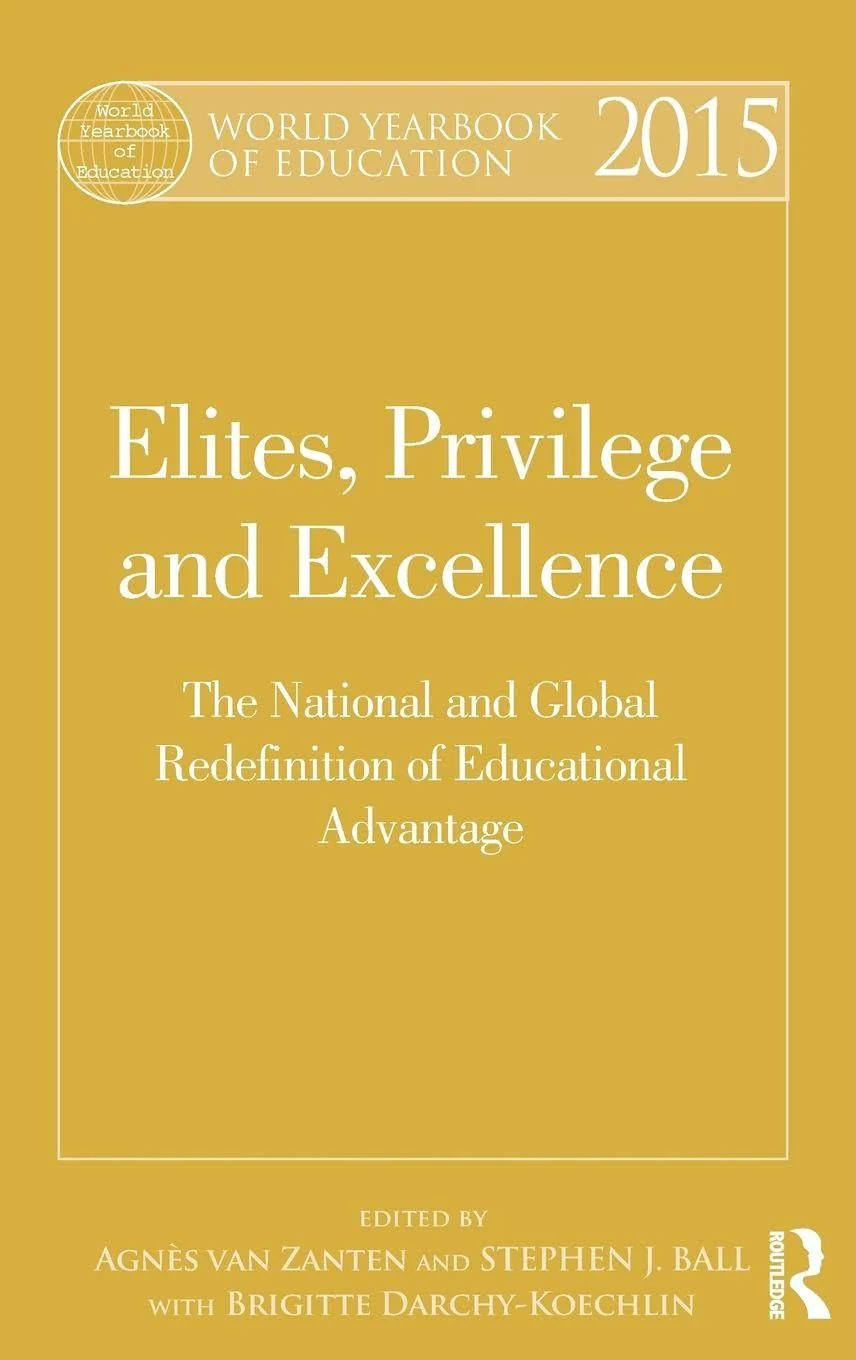
World Yearbook of Education 2015
This latest volume in the World Yearbook of Education Series focuses on educational elites and inequality, concentrating on the ways in which established and emergent groups located at the top of the social hierarchy and power structure reproduce, establish or redefine their position.
The volume is organised around three main issues:
- Analysing how parents, students, and graduates in positions of social advantage use their assets and capitals in educational strategies and how these differ for old and new, cultural and economic elites.
- Studying how elite institutions have adapted their strategies to account for changes in the social structure, policy, and their institutional environment, exploring the impact of these strategies on educational systems at the national and global levels.
- Mapping the new global dynamics in elite education, including new forms of 'international education' and 'transnational cultural capital', and examining how new global educational elite pathways shape elite students’ identities, status, and trajectories.
Utilising both social and institutional approaches, as well as focusing on practices and policies, the volume draws on research conducted in secondary schools and higher education. Furthermore, the global contributions within the book allow for comparison and contrast of situations in different countries. This results in a comprehensive picture of common processes and national differences concerning advantage and excellence, and a thorough examination of the impact of globalisation on the strategies, identities, and trajectories of elite groups and individuals, alongside more general cultural and economic processes.
This latest volume in the World Yearbook of Education Series focuses on educational elites and inequality, concentrating on the ways in which established and emergent groups located at the top of the social hierarchy and power structure reproduce, establish or redefine their position.
The volume is organised around three main issues:
- Analysing how parents, students, and graduates in positions of social advantage use their assets and capitals in educational strategies and how these differ for old and new, cultural and economic elites.
- Studying how elite institutions have adapted their strategies to account for changes in the social structure, policy, and their institutional environment, exploring the impact of these strategies on educational systems at the national and global levels.
- Mapping the new global dynamics in elite education, including new forms of 'international education' and 'transnational cultural capital', and examining how new global educational elite pathways shape elite students’ identities, status, and trajectories.
Utilising both social and institutional approaches, as well as focusing on practices and policies, the volume draws on research conducted in secondary schools and higher education. Furthermore, the global contributions within the book allow for comparison and contrast of situations in different countries. This results in a comprehensive picture of common processes and national differences concerning advantage and excellence, and a thorough examination of the impact of globalisation on the strategies, identities, and trajectories of elite groups and individuals, alongside more general cultural and economic processes.
Description
This latest volume in the World Yearbook of Education Series focuses on educational elites and inequality, concentrating on the ways in which established and emergent groups located at the top of the social hierarchy and power structure reproduce, establish or redefine their position.
The volume is organised around three main issues:
- Analysing how parents, students, and graduates in positions of social advantage use their assets and capitals in educational strategies and how these differ for old and new, cultural and economic elites.
- Studying how elite institutions have adapted their strategies to account for changes in the social structure, policy, and their institutional environment, exploring the impact of these strategies on educational systems at the national and global levels.
- Mapping the new global dynamics in elite education, including new forms of 'international education' and 'transnational cultural capital', and examining how new global educational elite pathways shape elite students’ identities, status, and trajectories.
Utilising both social and institutional approaches, as well as focusing on practices and policies, the volume draws on research conducted in secondary schools and higher education. Furthermore, the global contributions within the book allow for comparison and contrast of situations in different countries. This results in a comprehensive picture of common processes and national differences concerning advantage and excellence, and a thorough examination of the impact of globalisation on the strategies, identities, and trajectories of elite groups and individuals, alongside more general cultural and economic processes.